 Founded only 54 years ago, UCLA Law School has rapidly risen to become one of the nation’s finest law schools and an attractive choice for many law school applicants. UCLA Law School offers the best of both worlds, providing a world class education in beautiful Southern California. Given the high demand for a UCLA law degree, it is no surprise that the admissions office sets the bar quite high for applicants. The Princeton Review gives the school an “Admissions Selectivity Rating” of 96 out of a possible 100. Only 18% of applicants were granted admission last year (1,140 out of 6,499). For those who were admitted, GPA’s ranged from 3.54, for the 25th percentile, to 3.85, for the 75th. The same range for the LSAT was 163-169, while the medians for such measures were 3.72 and 167, respectively.  The rapid ascendance of Stanford Law School over Ivy League icons founded centuries before Stanford was recently evidenced when Stanford was rated as the second best law school in the nation after Yale Law School in many national law school rankings. While Stanford may still be behind Yale Law School in academic reputation, I believe the many intangibles Stanford Law School offers make it the best law school in the nation. Stanford Law School combines great academics with an enjoyable but challenging law school curriculum, all enjoyed in beautiful Palo Alto, California which enjoys 300 days of sunshine a year. 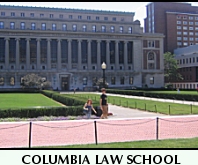 Established in 1858, the Columbia University School of Law is consistently considered to be among the handful of the best law schools in America. Given its location and reputation in New York City, its Ivy-league status and its long history of academic excellence, Columbia’s high rank and prestige should come as no surprise. For qualified applicants wishing to learn and work in the legal capital of the world, there is perhaps no better place to attend law school than Columbia. Admissions and Tuition Applicants interested in applying to Columbia should be prepared to face a tremendously selective admissions process. The school receives around 7,500 applications each year, about 1,100 of which are accepted. Typically, the accepted applicant corps boasts a median GPA of 3.65 and a median LSAT score of 172.  In 1987, when U.S. News began ranking the top law schools in the nation, Michigan Law was placed as the third best law school in the country, after Yale and Harvard. Although there have been significant changes over the last decade and a half among the top law schools of the U.S., Michigan has remained a highly prestigious member of the upper echelon of law schools. With a location that attracts recruiters from the major legal markets of Chicago and New York, as well as one of the most attractive campuses in the country and a vibrant college town in Ann Arbor, Michigan Law continues to attract applicants of the highest caliber each year. It is a law school that offers a number of appealing contrasts: a top-tier education without a cutthroat atmosphere, a vibrant college and neighboring community without the commotion of a big city, and even different study environments with both a Gothic reading room and an ultra-modern skylit counterpart.  With its established academic excellence and superlative job placement in New York City and beyond, the New York University School of Law has secured for itself a comfortable place among the nation’s very best law schools. Known for its dedication to the public sector, emphasis on diversity and prime location in New York City, NYU enjoys a ranking above several Ivy-League schools and confidently calls itself ‘the preeminent global law school.’ Admissions and Tuition NYU’s applicants face an ultra-selective admissions process. Over 7,000 applicants are vying for 450 seats in an entering class which typically boasts a median GPA of 3.75 and a median LSAT score of 171. Aside from an applicant’s GPA and LSAT performance, demonstrated dedication to public service and ethnic diversity are thought to be especially valued by the school. Applicants who apply to NYU with multiple LSAT scores are judged based on the average of those scores. Also, because of NYU’s February 1st application deadline, scores from the previous year’s December administration of the LSAT will be the last set considered by the school. | 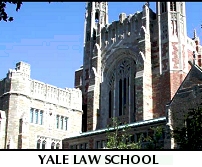 Since US News began ranking schools, Yale Law School has always held the #1 position, and for good reason: it is unanimously considered one of the preeminent centers of legal studies in the world, and while its closest rivals at Harvard and Stanford also offer formidable prestige and their own array of career opportunities, Yale Law has remained a distinctive institution in many ways. It has graduated both Bill and Hillary Clinton, President Ford, and Supreme Court Justices Clarence Thomas and Samuel Alito. Famed for its abolition of standard grades in the 1960s and the lowest ratio of students to faculty in the country, Yale Law has also earned equal notoriety for its supposed "scholarly" bent and its legendary admissions process.
Being part of the nation's best public university system carries many advantages, the greatest being that Boalt's tuition is below that of other top law schools. Currently, in-state resident tuition is under $27,000 per year and nonresidents, who pay under $40,000 a year, can generally achieve residency and receive the lower in-state tuition within one year.  While Yale Law has been secure in its place at the top of law school rankings, Harvard Law School remains the pinnacle for most people outside the legal profession. Having been immortalized in movies from "The Firm" to "Paper Chase" and "Legally Blonde," Harvard Law School has also been dubbed the "H-Bomb." With it, any resume gains instant credibility and respect. Nevertheless, there is far more to attending the world's most famous law school than the unlimited career prospects and grueling academics it is reputed to command-although it is undeniable that the greatest benefit of attending Harvard Law School is the multitude of choices that any graduate has at his disposal. Regardless of whether one wants to be a judicial clerk, a law school professor, or work at one of the top 100 law firms anywhere the nation, Harvard Law School opens all doors. While Harvard Law School has more than its fair share of "gunners" going for top grades, the fact that great opportunities are available to anyone who graduates in the top half of their class greatly lessens competition. your text  Located in the heart of Philadelphia, Penn Law School is all that an ivy league promises: a great education, a beautiful campus, and a memorable experience. Founded in 1790 with a signer of the Declaration of Independence as its first professor, Penn Law has a right to be proud of its past while providing its students with a future of which they can also be proud. Admissions and Tuition Ranked seventh in the U.S. News law school rankings, Penn Law School has high admissions standards to match its ranking. Only 16.3% of applicants are admitted and the average G.P.A ranges from 3.5 to 3.8 and average LSAT scores range from 166-171 (these ranges are for students at the 25th and 75th percentiles respectively). Several joint degrees are available, including with the world-renowned Wharton School of Business, with each school requiring a separate application. Penn Law does not offer evening or part-time degrees. Early notification is an option if applications are submitted by November first. Frequently cited as the "Harvard of the South," Duke Law School no longer needs any mention of its Ivy League counterpart to inspire recognition. An outstanding academic reputation, beautiful campus, and warm atmosphere are among the law school's many attributes Duke Law School was recently ranked 12th by the US News law school rankings. The school's admission criteria match its high standings. Of the 5,800 applicants for the recent entering class, roughly 1500 were offered acceptance and 207 matriculated. The median LSAT was 168 and the median GPA was 3.78. Joint degree programs are offered, and students wishing to earn both a masters and law degree can do so in three years, needing only to apply to the law school and include an additional letter of interest. Four year professional degree programs are offered in conjunction with the divinity school, medical school, business school, public policy school, and the school of the environment and earth sciences. Early action is an option in the application process; however Duke warns that those students will be evaluated on a higher standard than those submitted for regular admissions. Though the regular admissions application deadline is not until March 1, Duke also advises that all forms be submitted by January 1. 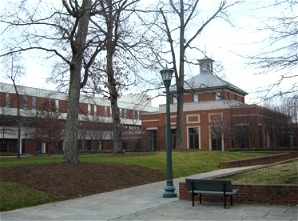 Founded by Thomas Jefferson, Virginia Law is one of the oldest legal institutions in the United States, and has steadily maintained the lead among public law schools with close rivals Michigan and Boalt Hall (Berkeley). Students are able to enjoy both the attractions of Charlottesville and the surrounding Blue Ridge Mountains, while attending school near the major legal markets of the East Coast. They also attend a school that has national reach in placing its graduates, with a strong network of alumni in both the judicial system and private practice
With a 25th-75th percentile range of 3.53 to 3.83 for its 2008 entering class, and a corresponding LSAT distribution from 167 to 171, Virginia remains as selective as many of its peers in the top fourteen law schools. However, in-state residents enjoy a major advantage in admissions, with some 40% of the seats in each class reserved for Virginia applicants. Officially, the LSAT/GPA index is the first category by which applications are sorted, but Virginia's admissions staff stress that they consider all applications fully. Approximately 5,500 students apply for admission annually, with slightly over 1,000 gaining entrance to the law school and 360 or so actually filling their seats. Applicants who send in their completed applications by November receive early notification of their decisions by the middle of December |